Blog
What Is Tackle Twill and Why Do You Need It?

Tackle Twill Explained: What It Is and Why Your Apparel Needs It
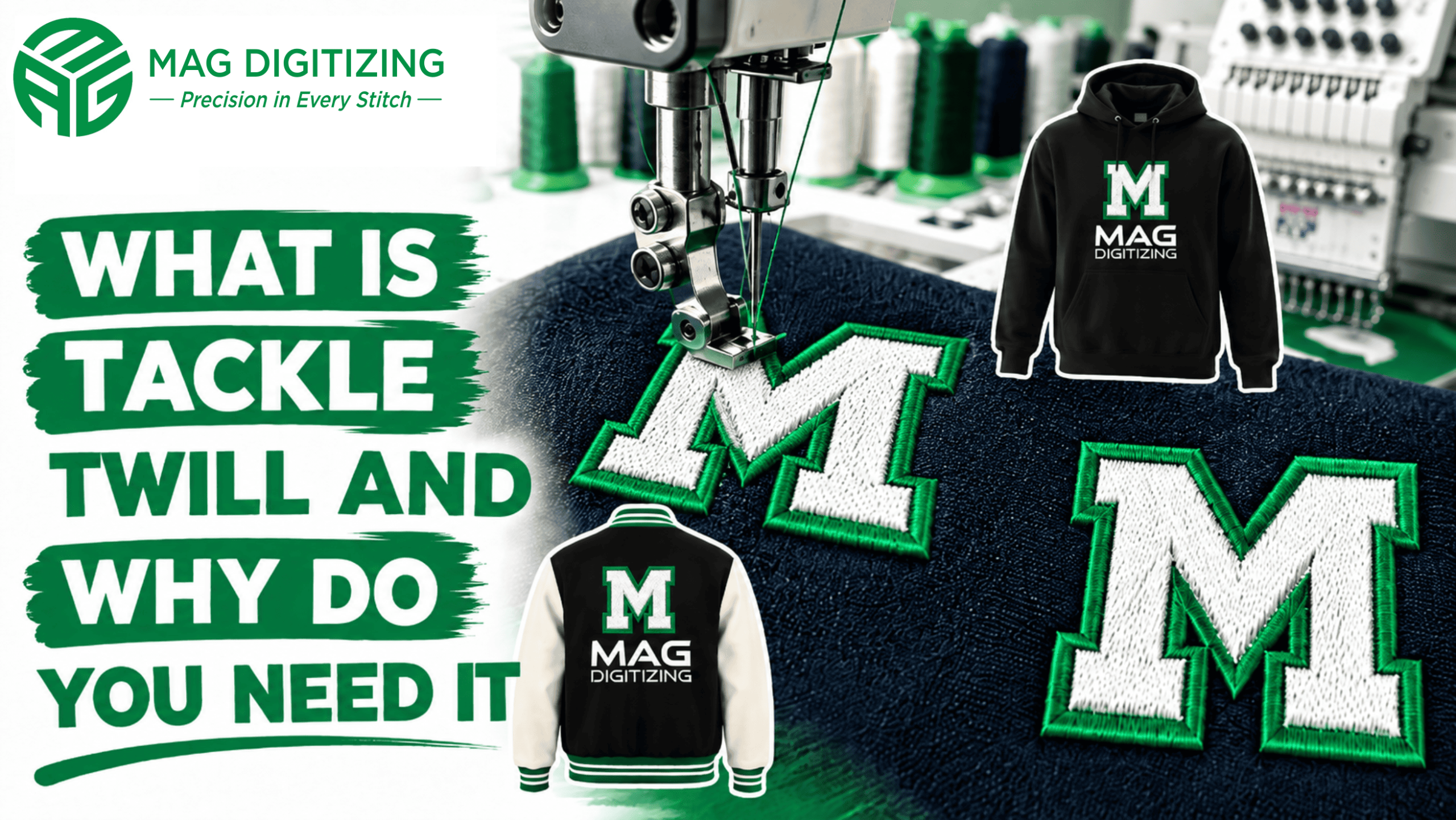
Grab any varsity jacket off a rack and look closely at the big letters on it chances are they’re not stitched the same way as the smaller logo sitting on the chest. That thick, raised look, almost like the letters are sitting on top of the fabric instead of being part of it, has a name most people don’t know: tackle twill.
People have been using it for decades now. Once you know what to look for, you start spotting it on almost every team jacket, jersey number, and school hoodie out there. It’s stuck around this long for a reason.
What Tackle Twill Actually Is
The basic idea: you take a piece of twill fabric, cut it into whatever letter, number, or shape you need, then place it on the garment. From there, an embroidery machine goes around the border typically with a satin or zigzag stitch and locks it in place for good.
So unlike regular embroidery, where the machine fills in the entire shape stitch by stitch, twill skips most of that. The fabric itself does the heavy lifting for color and shape. The stitching is really just there to secure it and clean up the edge.
Why It Has That Raised Look
That classic 3D, textured appearance on varsity jackets? That’s just the fabric sitting on top of the garment rather than being flattened into it through stitching. Because you’re working with an actual piece of cloth instead of thousands of thread passes, it holds its shape well and doesn’t sag or flatten out the way heavily filled embroidery sometimes can — especially on big letters or numbers.
Why People Actually Choose It
Big designs stay light. Try stitching a full 10-inch letter using standard fill embroidery and you’ll end up with something stiff, heavy, and honestly kind of uncomfortable against skin. Twill avoids that problem entirely since most of the surface is fabric, not dense thread buildup.
Production moves faster. Machines aren’t spending time filling in every inch of the design, so twill pieces come together noticeably quicker than an equivalent fully-embroidered version. When you’re producing dozens of matching jerseys, that time savings is real.
It survives the wash. Because the border stitch locks the fabric down tightly, twill letters don’t fray or peel after repeated washing — something uniforms and jackets go through constantly.
Costs stay more reasonable. Less stitching time generally means better pricing on bulk orders compared to filling the same size letter entirely with thread.
It just looks like it’s supposed to. There’s an expectation baked into varsity-style apparel at this point — people see block letters and jersey numbers and expect that raised twill texture. Standard embroidery on those same designs can feel a little flat by comparison.
Where You’ll Run Into It
Mostly in athletic and school apparel: team jackets, jersey numbers, mascots, last names on the back of uniforms. It also shows up in corporate branding when a company wants a big, bold logo without the stiffness that comes with heavy fill-stitch work.
Is It Right for Every Design?
Not really. Twill works best with bold, simple shapes block letters, numbers, clean outlines. Anything with fine detail, shading, or intricate linework doesn’t translate well, since the fabric piece needs edges clean enough to cut precisely. Detailed logos are still better off going through standard embroidery digitizing.
The rule of thumb tends to be: big and simple leans toward twill, detailed and intricate leans toward regular embroidery. A lot of garments actually use both twill for the oversized team name, regular stitching for a smaller detailed logo elsewhere on the same piece.
The Digitizing Behind It Still Matters
Even with twill doing most of the visual work, the file setup behind it makes or breaks the final result. Border stitch density has to match the fabric weight, cut lines need to be precise, and placement has to line up exactly with the twill piece miss any of that and you get rough edges or shifting during production.
That’s where having an experienced team helps. Not every Embroidery Digitizing Services provider handles twill well, but the ones who do it right understand how to set up satin borders, cut files, and stitch density so the finished patch holds up and looks clean.
Wrapping Up
There’s more to tackle twill than just how it looks. It solves real problems around weight, durability, and cost once designs get bigger. Once you understand the mechanics behind it, it’s easy to see why it’s stayed a go-to choice for team apparel for this long.
If you’ve got a project coming up that needs twill work jerseys, jacket lettering, bold branded gear finding someone who handles both twill and standard stitching properly makes a real difference. Mag Digitizing provides online embroidery digitizing along with twill-ready files built for clean cuts and borders that actually last, backed by dependable digitizing services in USA for teams and businesses that need the work done right.