
Blog
Tips for Cleaner & Better Machine Embroidery Results

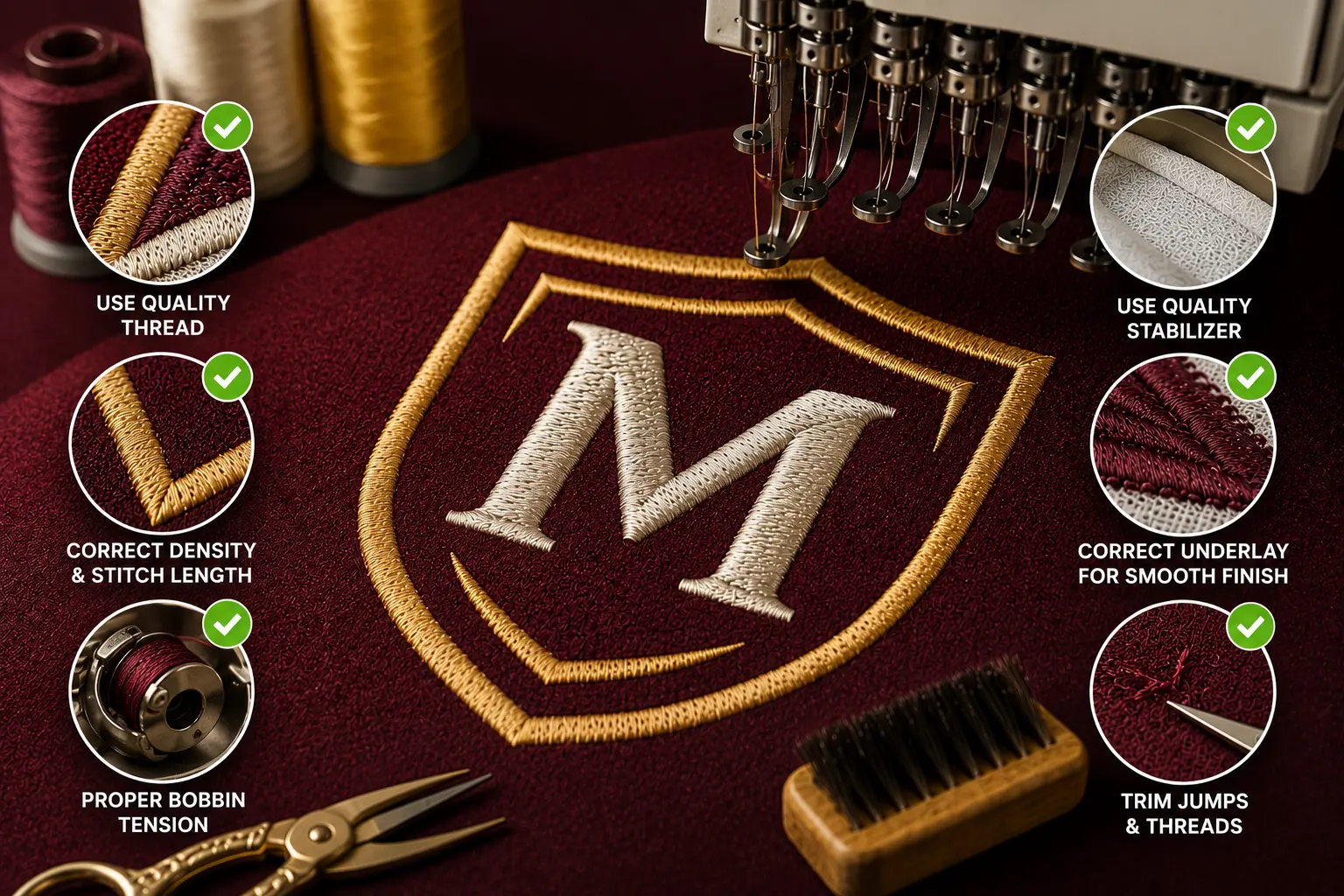
Machine embroidery can produce beautiful, professional-quality designs when everything is done correctly. However, issues like thread breaks, puckering, uneven stitching, gaps, and messy finishes are common problems many embroiderers face.
Whether you are running a professional embroidery business or working on personal projects, achieving clean and smooth embroidery results depends on several important factors — including proper digitizing, machine settings, stabilizers, thread quality, and fabric handling.
In this guide, we will share the most effective tips to help you improve embroidery quality, reduce mistakes, and achieve cleaner machine embroidery results every time.
Why Clean Embroidery Results Matter
High-quality embroidery creates a more professional appearance, improves customer satisfaction, and helps garments last longer.
Poor embroidery quality can lead to:
- Uneven stitching
- Thread breaks
- Fabric puckering
- Misaligned designs
- Distorted lettering
- Wasted materials and production time
Clean embroidery not only improves the final product but also helps your embroidery machine run more efficiently.
1. Use High-Quality Digitized Embroidery Files
One of the biggest factors affecting embroidery quality is the digitized file itself.
Even the best embroidery machine cannot produce clean results from a poorly digitized design.
Professional digitizing ensures:
- Proper stitch density
- Correct underlay
- Smooth stitch paths
- Balanced pull compensation
- Clean lettering and details
Low-quality auto-digitized files often cause thread breaks, gaps, puckering, and uneven embroidery.
Tip:
Always use professionally digitized embroidery files optimized for your fabric type and embroidery machine.
2. Choose the Right Stabilizer
Stabilizers play a major role in keeping fabric stable during embroidery.
Using the wrong stabilizer can cause:
- Fabric shifting
- Wrinkles
- Distortion
- Poor stitch quality
Different fabrics require different stabilizers.
Common Stabilizer Types
Cut-Away Stabilizer
Best for stretchy fabrics like:
- T-shirts
- Polos
- Hoodies
Tear-Away Stabilizer
Best for stable fabrics like:
- Caps
- Towels
- Jackets
Water-Soluble Stabilizer
Used for:
- Delicate fabrics
- Topping on towels
- Puffy fabrics
Tip:
Always match the stabilizer to the fabric type and design complexity.
3. Use Good Quality Embroidery Thread
Cheap thread often causes:
- Frequent thread breaks
- Fuzz buildup
- Uneven stitching
- Poor shine and appearance
High-quality embroidery thread produces smoother stitching and cleaner finishes.
Popular Thread Types
Polyester Thread
- Strong and durable
- Excellent for commercial embroidery
- Colorfast and resistant to fading
Rayon Thread
- Softer shine and smooth finish
- Popular for decorative embroidery
Tip:
Store thread away from dust, humidity, and direct sunlight to maintain quality.
4. Use the Correct Needle
Using the wrong needle can damage fabric and reduce embroidery quality.
Different fabrics require different needle types and sizes.
Common Embroidery Needles
Ballpoint Needles
Best for knit and stretchy fabrics.
Sharp Needles
Best for woven fabrics.
Titanium Needles
More durable for heavy production use.
Tip:
Replace embroidery needles regularly, especially during heavy production.
A dull needle can cause:
- Thread shredding
- Skipped stitches
- Fabric damage
5. Properly Hoop the Fabric
Incorrect hooping is one of the most common causes of poor embroidery results.
If the fabric is too loose or too tight, it can lead to:
- Puckering
- Misalignment
- Distortion
Proper Hooping Tips
- Hoop fabric tightly like a drum surface
- Avoid overstretching fabric
- Keep stabilizer smooth and wrinkle-free
- Use the correct hoop size for the design
Tip:
Magnetic hoops can improve consistency and reduce hoop burn on delicate fabrics.
6. Adjust Thread Tension Correctly
Incorrect thread tension can ruin embroidery quality.
Signs of Poor Tension
Upper Tension Too Tight
- Thread breaks
- Puckering
- Tight stitches
Upper Tension Too Loose
- Loops on top
- Messy stitching
- Poor coverage
Balanced tension creates smooth, clean embroidery on both sides of the fabric.
Tip:
Test tension regularly before production runs.
7. Reduce Excessive Stitch Density
Too many stitches packed closely together can cause:
- Thread breaks
- Stiff embroidery
- Fabric distortion
- Needle overheating
Professional digitizing uses proper density settings to maintain clean embroidery without overloading the fabric.
Tip:
Avoid overly dense embroidery designs, especially on lightweight fabrics.
8. Use Proper Underlay Stitches
Underlay stitches help stabilize embroidery and improve stitch quality.
Good underlay:
- Prevents fabric shifting
- Improves top stitch appearance
- Enhances coverage
- Creates smoother embroidery
Without proper underlay, designs may look uneven or unstable.
Tip:
Different fabrics and stitch types require different underlay settings.
9. Slow Down the Machine When Needed
Running embroidery machines at maximum speed can sometimes reduce quality, especially on detailed designs.
Slowing down the machine can help:
- Reduce thread breaks
- Improve stitch accuracy
- Produce smoother curves and lettering
Tip:
Lower speeds often improve results on:
- Small lettering
- Detailed logos
- Delicate fabrics
10. Trim Jump Stitches & Clean Loose Threads
Even great embroidery designs can look messy if loose threads are left behind.
After embroidery:
- Trim jump stitches
- Remove loose thread ends
- Clean excess stabilizer
These small finishing steps greatly improve the final appearance.
11. Test Your Design Before Full Production
Never skip test stitching.
A test sew-out helps identify:
- Thread tension problems
- Density issues
- Registration errors
- Fabric distortion
- Color sequence problems
Testing saves time, materials, and customer complaints.
Tip:
Always test embroidery on the same fabric and stabilizer combination used for the final product.
12. Keep Your Embroidery Machine Clean
Dust, lint, and thread buildup affect machine performance.
Dirty machines can cause:
- Thread jams
- Needle issues
- Uneven stitching
- Machine errors
Regular Maintenance Tips
- Clean lint daily
- Oil machine components properly
- Check needle condition
- Inspect bobbin area regularly
Routine maintenance improves embroidery quality and machine lifespan.
Common Machine Embroidery Mistakes to Avoid
Using Poor Digitized Files
Bad digitizing leads to poor embroidery results regardless of machine quality.
Ignoring Fabric Type
Different fabrics require different settings and stabilizers.
Using Cheap Materials
Low-quality thread and stabilizers often create embroidery problems.
Skipping Test Runs
Always test before full production.
Overcomplicating Designs
Tiny details and very small lettering may not sew cleanly.
Best Fabrics for Cleaner Embroidery Results
Some fabrics are naturally easier to embroider than others.
Easier Fabrics
- Cotton
- Twill
- Denim
- Canvas
- Polos
More Challenging Fabrics
- Stretch fabrics
- Thin materials
- Towels
- Silk
- Puffy fabrics
Challenging fabrics require more careful digitizing and stabilization.
Final Thoughts
Achieving cleaner and better machine embroidery results is not just about owning an expensive embroidery machine. High-quality embroidery comes from using the right combination of digitizing, stabilizers, needles, thread, machine settings, and proper embroidery techniques.
Small improvements in setup and preparation can dramatically improve embroidery quality, reduce production problems, and create more professional-looking designs.
At MAG Digitizing, we provide professionally digitized embroidery files optimized for cleaner stitching, smoother machine performance, and better embroidery results across all major embroidery machine brands and fabric types.
Whether you are embroidering hats, jackets, uniforms, or custom apparel, proper digitizing and machine setup are the key to achieving outstanding embroidery quality every time.