Blog
Why Professional Embroidery Digitizing Is Better Than Auto Digitizing

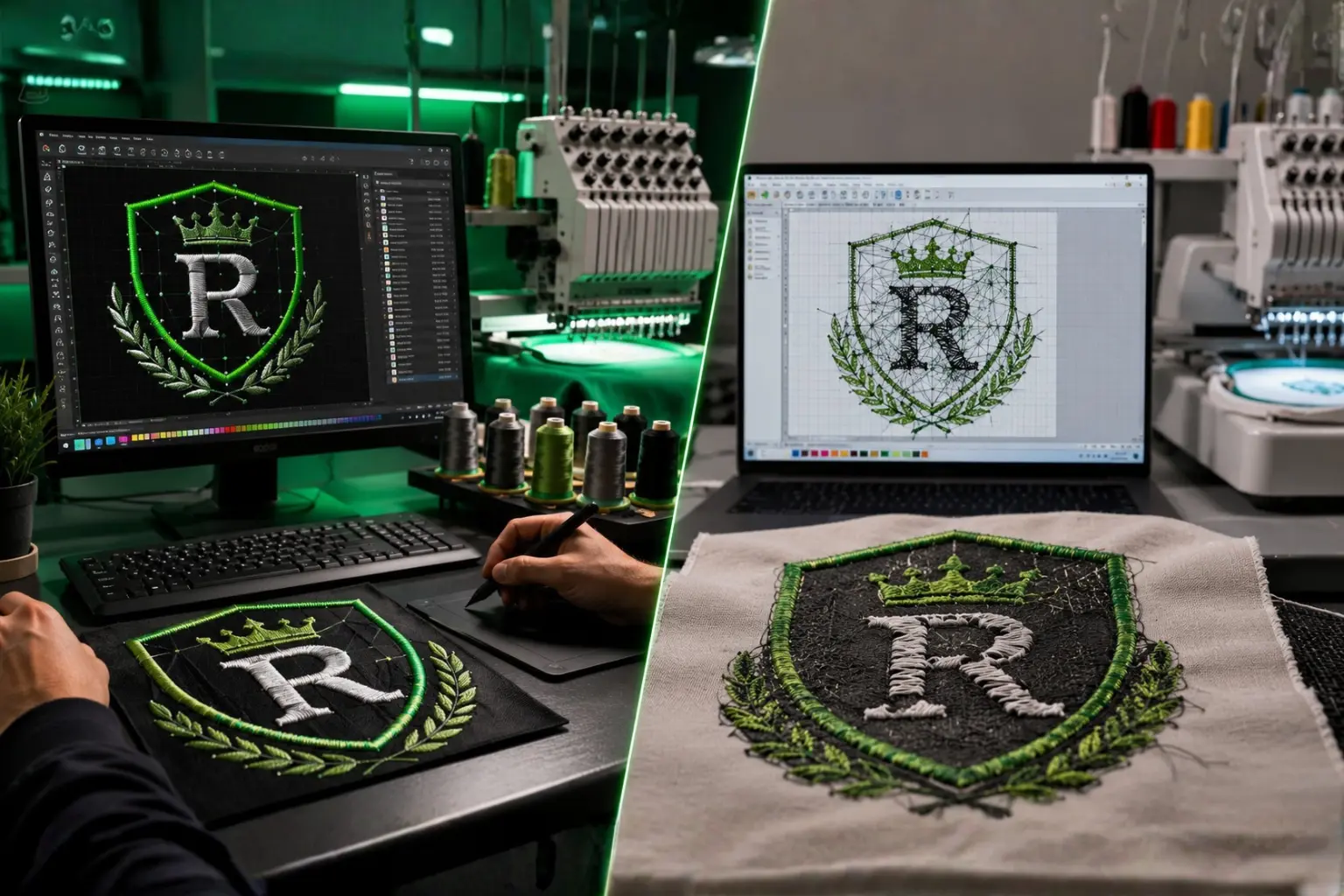
Embroidery digitizing is one of the most important steps in creating clean, professional, and machine-ready embroidery. Before an embroidery machine can stitch a logo, text, patch, or custom design, the artwork must be converted into a stitch file that the machine can read.
Today, many embroidery software programs offer auto digitizing features. These tools can quickly convert an image into stitches with only a few clicks. For beginners, this may sound easy and convenient. However, auto digitizing usually cannot match the quality, accuracy, and control of professional embroidery digitizing.
Professional embroidery digitizing is done by a skilled digitizer who understands stitch types, fabric behavior, density, underlay, pull compensation, trims, thread flow, and machine requirements. Instead of letting software guess how the design should be stitched, a professional digitizer manually controls the stitch process to create a clean and production-ready file.
In this guide, we will explain the difference between professional embroidery digitizing and auto digitizing, why professional digitizing gives better results, and when auto digitizing may cause embroidery problems.
What Is Auto Digitizing?
Auto digitizing is a software feature that automatically converts artwork into embroidery stitches. The user uploads an image, selects a few settings, and the software creates a stitch file.
Auto digitizing can be found in many embroidery software programs. It is often promoted as a fast way to turn images into embroidery files.
Auto digitizing may work for very simple designs, such as:
- Basic shapes
- Large simple text
- Simple icons
- Low-detail artwork
- Practice designs
- Personal projects
However, embroidery is not just about converting an image into stitches. A machine embroidery file needs proper stitch direction, density, underlay, pull compensation, trims, color sequence, and fabric adjustments. Auto digitizing software often struggles with these details.
The software does not truly understand the real-world embroidery result. It only follows automatic rules based on the image. This is why auto digitized files may look acceptable on screen but stitch poorly on fabric.
What Is Professional Embroidery Digitizing?
Professional embroidery digitizing is the process of manually creating a machine-ready embroidery file using embroidery software and expert knowledge.
A professional digitizer reviews the artwork and decides how each part of the design should be stitched. The digitizer controls the complete embroidery structure, including:
- Stitch type
- Stitch direction
- Stitch density
- Underlay
- Pull compensation
- Thread color sequence
- Start and stop points
- Trims and jumps
- Fabric settings
- Machine format
- Design size
- Small text adjustments
Professional digitizing is not just about creating a file that opens on an embroidery machine. It is about creating a file that stitches smoothly, looks clean, and works properly on the selected fabric and machine.
This is especially important for business logos, uniforms, caps, patches, jackets, left chest embroidery, and custom apparel.
Professional Digitizing vs Auto Digitizing: Main Difference
The main difference is control.
Auto digitizing allows the software to decide how the design should be stitched. Professional digitizing allows a skilled digitizer to decide how the design should be stitched.
Auto digitizing is fast, but it often lacks accuracy. Professional digitizing takes more skill, but it creates better results.
| Feature | Auto Digitizing | Professional Digitizing |
|---|---|---|
| Stitch control | Limited | Full manual control |
| Stitch quality | Often inconsistent | Clean and optimized |
| Small text | Usually poor | Carefully adjusted |
| Fabric settings | Basic or missing | Adjusted for fabric |
| Underlay | Automatic | Manually planned |
| Density | Often too high or too low | Balanced properly |
| Pull compensation | Limited | Professionally applied |
| Trims and jumps | Often excessive | Reduced and optimized |
| Production quality | Unreliable | Machine-ready |
| Best use | Simple practice designs | Logos, uniforms, caps, patches, business embroidery |
For professional embroidery, manual digitizing is almost always the better choice.
Why Professional Embroidery Digitizing Is Better
Professional embroidery digitizing provides better results because it is based on experience, judgment, and real embroidery knowledge. A skilled digitizer does not simply copy the image. They rebuild the design in a way that thread can stitch properly on fabric.
Below are the main reasons why professional digitizing is better than auto digitizing.
1. Better Stitch Quality
The biggest benefit of professional digitizing is better stitch quality.
A professional digitizer chooses the correct stitch type for each part of the design. For example, satin stitches may be used for small text and borders, while fill stitches may be used for large areas. Running stitches may be used for fine details.
Auto digitizing often applies stitch types automatically without understanding which stitch will look best. This can result in rough edges, uneven fills, poor outlines, and messy details.
Professional digitizing helps create:
- Smooth edges
- Clean fills
- Better details
- Balanced texture
- Proper stitch flow
- Professional appearance
Good stitch quality is especially important for logos because the embroidery represents your brand.
2. Correct Stitch Density
Stitch density means how close the stitches are to each other. If the density is too high, the embroidery can become too thick, stiff, and difficult to sew. If the density is too low, the fabric may show through the design.
Auto digitizing often creates density problems because it does not fully understand the fabric, thread, and design purpose.
Too much density can cause:
- Thread breaks
- Needle breaks
- Fabric puckering
- Hard embroidery
- Slow machine running
- Poor comfort on garments
Too little density can cause:
- Gaps in the design
- Weak coverage
- Poor color appearance
- Unprofessional results
A professional digitizer adjusts density based on the design size, stitch type, fabric, and final use. This creates embroidery that looks clean and runs smoothly.
3. Proper Underlay for Stronger Embroidery
Underlay stitches are hidden support stitches placed under the main top stitches. They help stabilize the fabric and support the design.
Underlay is one of the most important parts of embroidery digitizing, but auto digitizing often handles it poorly.
Proper underlay helps:
- Reduce fabric movement
- Prevent puckering
- Improve stitch coverage
- Support satin stitches
- Create sharper edges
- Keep the design stable
- Improve final embroidery quality
Different fabrics need different underlay. For example, a polo shirt, cap, towel, hoodie, and fleece jacket may all need different underlay settings.
A professional digitizer understands how to set the right underlay for the fabric and design type.
4. Better Pull Compensation
When embroidery stitches are sewn into fabric, the thread naturally pulls the fabric. This can make shapes look thinner, smaller, or distorted. Pull compensation is used to adjust the design so it stitches correctly after this pulling effect.
Auto digitizing may not apply proper pull compensation, especially for small text, circles, borders, and detailed logos.
Without pull compensation:
- Circles may become oval
- Borders may not align
- Letters may look thin
- Shapes may become distorted
- Details may shift out of place
Professional digitizing applies pull compensation carefully so the final embroidery keeps the correct shape and size.
This is very important for brand logos, where accuracy matters.
5. Cleaner Small Text
Small text is one of the hardest things to embroider. Auto digitizing often struggles with small letters because it may create too many stitches, poor spacing, or unsuitable stitch types.
This can make small text look:
- Blurry
- Thick
- Broken
- Uneven
- Hard to read
- Messy after stitching
A professional digitizer can adjust small text by choosing the right stitch type, spacing, density, and font structure. Sometimes the digitizer may simplify or slightly modify the text to make it stitch cleanly.
For logos, uniforms, name badges, caps, and patches, readable text is extremely important.
6. Fewer Thread Breaks
Thread breaks are a common problem in embroidery production. They slow down the machine, waste time, and can damage the final result.
Poor auto digitizing can create thread breaks because of:
- Too much density
- Bad stitch direction
- Excessive short stitches
- Poor sequencing
- Too many trims
- Incorrect stitch angles
- Unstable underlay
Professional digitizing reduces these problems by creating a smoother stitch flow and machine-friendly design.
A well-digitized file helps the embroidery machine run more smoothly with fewer stops and fewer production issues.
7. Better Fabric Compatibility
Embroidery is affected by fabric type. A design that stitches well on cotton may not stitch the same way on fleece, towels, caps, denim, leather, or stretch fabric.
Auto digitizing usually does not understand fabric behavior deeply. It may create the same type of stitch file regardless of fabric.
Professional digitizing can be adjusted for different materials such as:
- Cotton
- Polyester
- Polo shirts
- Caps
- Denim
- Towels
- Fleece
- Hoodies
- Jackets
- Canvas
- Leather
- Stretch fabric
For example, towel embroidery needs strong underlay so the stitches do not sink into the fabric. Cap embroidery needs special sequencing to reduce distortion on the curved surface.
Professional digitizing makes the design more suitable for the actual material being embroidered.
8. Improved Design Accuracy
Professional digitizing helps keep the design closer to the original artwork. A skilled digitizer understands how to preserve important details while making the design embroidery-friendly.
Auto digitizing may misread shapes, ignore small details, create rough edges, or fill areas incorrectly. This can change the appearance of the design.
Professional digitizing helps maintain:
- Logo shape
- Letter spacing
- Design proportions
- Border alignment
- Important details
- Brand identity
- Clean visual balance
For businesses, accuracy is very important because the embroidered logo represents the company.
9. Better Stitch Direction and Texture
Stitch direction affects how embroidery reflects light and how the texture appears. A professional digitizer uses stitch angles to improve the design’s appearance.
Changing stitch direction can add depth, dimension, and separation between design elements.
Auto digitizing often uses basic stitch directions that may make the design look flat or messy.
Professional stitch direction helps create:
- Better shine
- More depth
- Cleaner separation
- Smoother fills
- More professional texture
This is especially useful for detailed logos, badges, patches, and decorative embroidery.
10. Reduced Unnecessary Trims and Jumps
Trims and jump stitches happen when the machine moves from one part of the design to another. Too many trims and jumps can make production slower and messy.
Auto digitizing often creates too many unnecessary trims because it does not always plan the best stitch path.
Too many trims can cause:
- Longer production time
- More machine stops
- Messy backside stitching
- Loose threads
- More cleanup work
- Higher risk of thread breaks
Professional digitizing creates a cleaner stitch path to reduce unnecessary trims and jumps. This makes the file more efficient and easier to produce.
11. Better Results for Caps
Cap embroidery is more difficult than flat embroidery because caps are curved and structured. Auto digitizing often fails to create good results for caps.
Caps need special digitizing techniques such as:
- Center-out stitching
- Proper underlay
- Correct density
- Strong pull compensation
- Reduced design height
- Careful sequencing
- Machine-friendly stitch flow
Professional cap digitizing helps prevent distortion and keeps the design clean on curved surfaces.
This is very important for embroidered caps, hats, sports teams, businesses, and promotional products.
12. Better Results for Patches
Patch embroidery needs strong, clean, and balanced digitizing. Patches often include borders, fill areas, text, and detailed artwork.
Auto digitizing may create poor patch results because it can overfill the design or fail to create clean borders.
Professional patch digitizing helps with:
- Clean satin borders
- Smooth fill areas
- Proper density
- Readable text
- Strong edges
- Balanced stitch count
- Professional finish
For custom patches, professional digitizing is highly recommended.
13. Better Production Efficiency
Professional digitizing is not only about appearance. It also affects production speed and machine performance.
A good digitized file can help reduce:
- Thread breaks
- Machine stops
- Excessive trims
- Needle problems
- Garment damage
- Wasted materials
- Rework
This saves time and money, especially for embroidery businesses handling customer orders or bulk production.
Auto digitizing may seem faster at first, but if the file causes stitching problems, it can waste more time during production.
14. Professional Digitizing Is Better for Business Logos
Business logos need to look clean, accurate, and professional. A poorly stitched logo can make a brand look low-quality.
Professional logo digitizing helps ensure:
- Clean lettering
- Sharp edges
- Accurate shape
- Proper colors
- Balanced stitching
- Better readability
- Professional brand appearance
Auto digitizing may be acceptable for practice, but it is not reliable enough for serious business branding.
If your logo is going on uniforms, caps, jackets, polos, bags, or workwear, professional digitizing is the better choice.
15. Professional Digitizing Reduces Wasted Garments
A bad embroidery file can ruin garments. Once embroidery is stitched incorrectly, it is often difficult or impossible to remove without damaging the fabric.
Poor auto digitizing can lead to:
- Puckered shirts
- Broken threads
- Misaligned outlines
- Distorted logos
- Holes in fabric
- Unreadable text
- Unprofessional results
Professional digitizing reduces the risk of these issues by creating a file that is ready for real embroidery production.
This is especially important when working with expensive garments, uniforms, jackets, caps, or customer items.
When Is Auto Digitizing Useful?
Auto digitizing is not completely useless. It can be helpful in certain situations.
Auto digitizing may be useful for:
- Learning embroidery software
- Testing simple shapes
- Personal practice designs
- Very basic artwork
- Quick rough previews
- Non-professional projects
However, for professional embroidery, customer orders, business logos, caps, patches, uniforms, and high-quality apparel, auto digitizing is usually not the best choice.
Why Auto Digitizing Often Looks Good on Screen but Bad on Fabric
One common problem with auto digitizing is that the design may look fine on the computer screen but stitch badly on fabric.
This happens because the screen preview does not always show real embroidery problems.
The preview may not reveal:
- Fabric puckering
- Thread tension issues
- Density problems
- Pull distortion
- Thread breaks
- Poor underlay
- Small text readability
- Machine performance issues
Embroidery is a physical process. Thread, needle, stabilizer, fabric, and machine movement all affect the final result. Professional digitizing considers these real-world factors.
Why Manual Digitizing Takes More Skill
Manual embroidery digitizing requires knowledge and experience. A professional digitizer must understand both design and production.
A skilled digitizer knows:
- How thread behaves
- How fabric reacts
- Which stitch type to use
- How to reduce distortion
- How to improve small text
- How to plan stitch sequence
- How to balance density
- How to prepare files for different machines
- How to make embroidery look clean and professional
This experience is what makes professional digitizing better than automatic software output.
The Real Cost of Poor Auto Digitizing
Auto digitizing may seem cheaper at first, but poor digitizing can become expensive later.
Bad digitizing can cost you money through:
- Wasted garments
- Wasted thread
- Wasted stabilizer
- Extra machine time
- Customer complaints
- Rework
- Refunds
- Lost reputation
For businesses, the cost of a bad embroidery file can be much higher than the cost of professional digitizing.
A professionally digitized file is an investment in quality, consistency, and customer satisfaction.
How to Know If Your File Is Professionally Digitized
A professionally digitized file should stitch smoothly and look clean.
Signs of good digitizing include:
- Clean edges
- Smooth stitch flow
- Balanced density
- Readable text
- Proper underlay
- Few unnecessary trims
- Correct color sequence
- Minimal thread breaks
- Good fabric compatibility
- Accurate design shape
Signs of poor digitizing include:
- Rough edges
- Too many thread breaks
- Thick and stiff embroidery
- Gaps in stitches
- Puckering fabric
- Misaligned outlines
- Poor small text
- Too many jump stitches
- Distorted shapes
The final test is always the stitch-out. A good file should look good on fabric, not just on screen.
Why Choose MAG Digitizing for Professional Embroidery Digitizing?
MAG Digitizing provides professional embroidery digitizing services for businesses, embroidery shops, apparel brands, and individuals who need clean, machine-ready embroidery files.
Our digitizing focuses on quality, accuracy, and smooth machine performance. Each design is prepared carefully to match the artwork, machine format, size, and embroidery purpose.
With MAG Digitizing, you can get:
- Clean and professional stitch files
- Proper density and underlay
- Smooth stitch paths
- Better small text handling
- Machine-ready embroidery formats
- Files for caps, shirts, jackets, patches, and more
- Popular formats like DST, PES, EXP, JEF, VP3, HUS, and more
- Production-ready files for smooth embroidery results
Whether you need logo digitizing, cap digitizing, patch digitizing, or custom embroidery digitizing, professional service helps make your final embroidery look better.
Frequently Asked Questions
What is auto digitizing?
Auto digitizing is a software feature that automatically converts artwork into embroidery stitches. It is fast but often lacks the quality and control needed for professional embroidery.
Is auto digitizing good for embroidery?
Auto digitizing can be useful for simple practice designs, but it is usually not recommended for professional logos, caps, uniforms, patches, or customer orders.
Why is professional embroidery digitizing better?
Professional digitizing is better because a skilled digitizer manually controls stitch type, density, underlay, pull compensation, trims, and fabric settings. This produces cleaner and more reliable embroidery.
Can auto digitizing create a DST or PES file?
Yes, some software can auto digitize and export files like DST or PES. However, just because the file opens on a machine does not mean it will stitch well.
Does professional digitizing reduce thread breaks?
Yes, professional digitizing can reduce thread breaks by using better stitch flow, correct density, proper underlay, and smoother sequencing.
Is manual digitizing better for logos?
Yes. Manual digitizing is much better for logos because it helps keep text readable, edges clean, shapes accurate, and the final embroidery professional.
Why does my auto-digitized design look bad when stitched?
It may look bad because of incorrect density, poor underlay, bad stitch direction, missing pull compensation, excessive trims, or unsuitable settings for the fabric.
Can I use auto digitizing for small text?
Auto digitizing is usually not good for small text. Small lettering needs careful manual adjustments to make it readable in embroidery.
Do I need professional digitizing for caps?
Yes, professional digitizing is highly recommended for caps because cap embroidery requires special settings due to the curved surface.
Is professional digitizing worth the cost?
Yes. Professional digitizing can save time, reduce production problems, prevent wasted garments, and create better embroidery results.
Final Thoughts
Auto digitizing may seem quick and easy, but it cannot replace the quality and control of professional embroidery digitizing. Embroidery is not just a digital image conversion. It is a detailed process that requires knowledge of stitches, fabric, density, underlay, pull compensation, trims, and machine behavior.
Professional embroidery digitizing creates cleaner stitches, better text, smoother edges, fewer thread breaks, improved fabric compatibility, and more reliable production results.
For personal practice, auto digitizing may be acceptable. But for business logos, uniforms, caps, patches, jackets, and customer embroidery orders, professional digitizing is the better choice.
If you want embroidery that looks clean, professional, and production-ready, always choose a professionally digitized file.
Call to Action
Need clean and machine-ready embroidery files for your logo or design? MAG Digitizing provides professional embroidery digitizing services for all major machine formats, including DST, PES, EXP, JEF, VP3, HUS, and more.
Send your artwork today and get a high-quality embroidery file prepared for smooth, professional stitching.