Blog
Picking an Embroidery Digitizer Without Getting Burned

Embroidery Digitizer Without Getting Burned
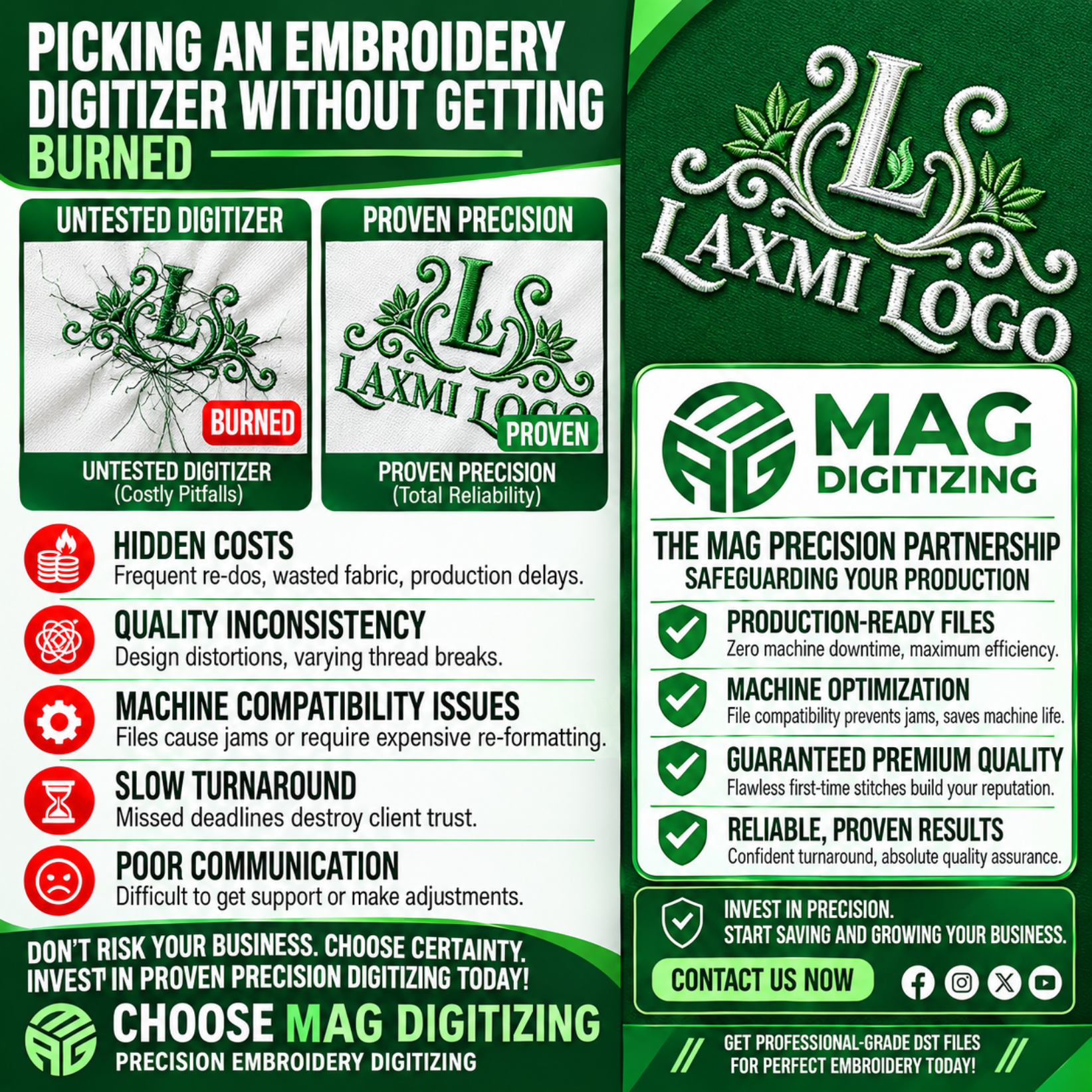
A shop owner I used to talk with regularly had this rule: never trust a digitizing file until it’s actually been stitched on scrap fabric. Sounds obvious, but you’d be surprised how many people skip that step and only find out something’s wrong after they’ve already put it on fifty caps for a client. That’s the real risk with embroidery digitizing services the mistake doesn’t show up on a screen, it shows up on the machine, usually at the worst possible time.
So what actually separates a solid digitizer from one that’s going to cause headaches? It’s not always obvious from a website or a portfolio page.
Stitch files aren’t just “converted” artwork
People sometimes think digitizing is basically tracing a logo into a format the machine can read, kind of like exporting a PDF. It’s not that. Whoever’s doing the digitizing has to make a bunch of judgment calls where the underlay goes, which direction the stitches run, how dense the fill needs to be on a given fabric, whether small text should be a satin stitch or something else entirely because at 6 points, satin just turns to mush.
None of that is guesswork if the person’s actually done this before. It’s guesswork if it’s coming out of software with a “digitize now” button and nobody’s touched it since.
This is why, when people search for digitizing services in USA or anywhere else, the smart move is to ask flat out: is a human doing this, or is it auto-generated with a quick cleanup pass? Some shops will dodge the question. That dodge tells you something.
A few things worth checking before you commit
Ask for a proof, not just a preview. A render on screen can look flawless and still stitch out badly puckering, thread breaks, gaps you can’t predict until needle actually hits fabric. If a provider offers to run a small test piece first, that’s usually a good sign they’re confident in their own work.
Formats shouldn’t be a hassle. DST, PES, JEF, EXP, VP3 whatever your machine reads, you shouldn’t have to go back and forth explaining it twice. If someone’s serious about offering digitizing services embroidery shops actually rely on day to day, they’ll have this sorted without friction.
Turnaround needs to match how you work. A rush shop taking same-day orders can’t wait four days for a file. But if you’re doing something more detailed a seasonal design, a complex illustrated logo rushing it might actually hurt the result. Just be upfront about your timeline when you request a quote instead of comparing prices in a vacuum.
Revisions matter more than people expect. Almost nothing comes out perfect the first time, especially with gradients or tiny lettering. What tells you a lot about a provider is how they handle the second round do they nickel-and-dime you for small fixes, or fold it into the process?
Why time zones and communication still matter
You’d assume digitizing, being fully digital, wouldn’t care where anyone’s physically located. Mostly true except when you need a same-day answer and the provider’s asleep on the other side of the planet. That’s the practical reason a lot of shops lean toward digitizing services in USA time zones, or at least someone who replies within a few hours instead of a full day later. It’s not about nationalism or anything like that, it’s just logistics. A delayed email can quietly eat an entire production day even if the actual digitizing itself only takes an hour.
That said, plenty of overseas digitizers do excellent work this isn’t a blanket rule. It’s just one more thing to weigh alongside quality.
On pricing cheap isn’t always the warning sign people think it is.
Pricing usually tracks with complexity and stitch count, not some flat number across the board. A basic wordmark logo shouldn’t cost the same as a detailed illustration with shading. Where it gets suspicious is when a provider charges the exact same low rate no matter how complicated the design is that’s often a signal the file’s mostly automated with minimal manual work behind it. On the flip side, a high price tag doesn’t guarantee quality either. The only real way to judge is against actual sample work, ideally photos of stitched results, not the invoice total.
Sticking with one digitizer long-term actually pays off
Here’s something people don’t think about until they’ve switched providers a few times: a digitizer who’s already worked with your logos knows your preferred density, your usual garment types, how you like text handled on a cap versus a flat panel. That familiarity means fewer revisions and faster turnaround on every order after the first. Plenty of embroidery shops end up sticking with the same digitizer for years, not because switching is impossible, but because re-explaining preferences from scratch every time gets old fast.
A quick story that sums it up
I remember a case where a client sent over a logo with really fine text under the main graphic maybe eight or nine points, tucked right below a crest design. The first version came back looking clean in the preview. Stitched out, though, the small text collapsed into a smudge because the digitizer hadn’t adjusted density for how tight the letters were spaced. A second pass, this time manually reworked with tighter pull compensation and a different stitch angle, fixed it completely. Same artwork, same machine, completely different result just because someone actually looked at the problem instead of trusting the software’s default settings. That’s basically the whole argument for paying attention to who’s doing your digitizing instead of just comparing prices on a page.